


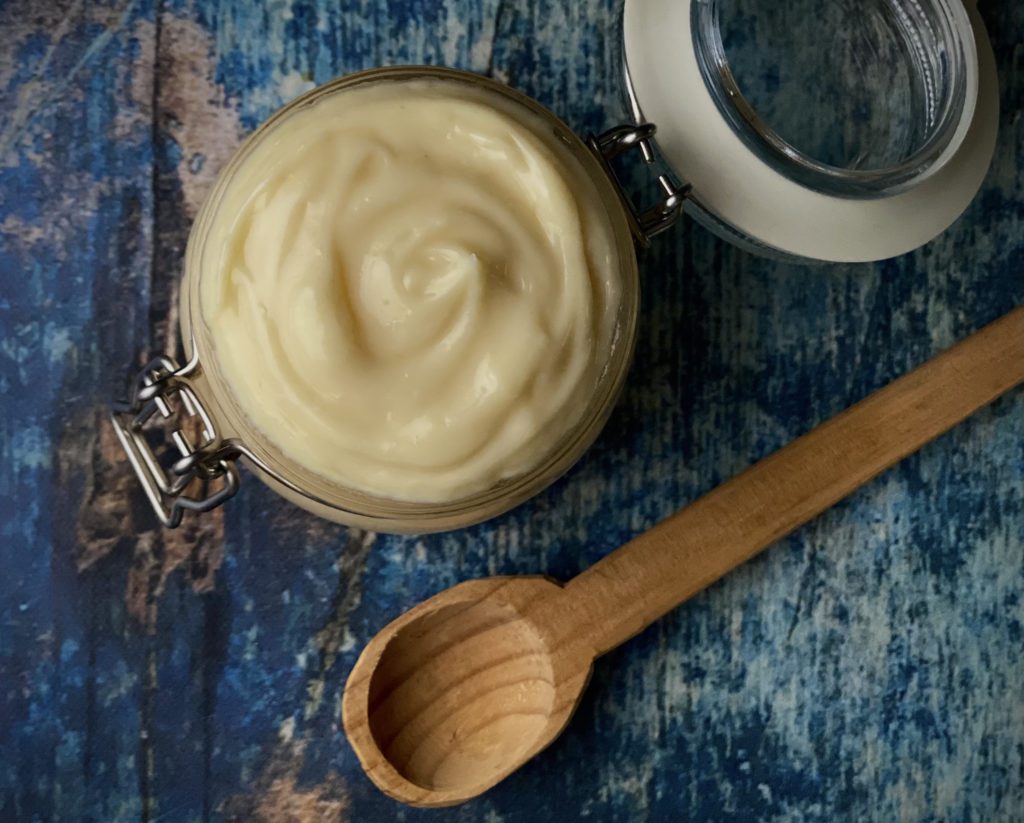
AB's Mayonnaise
ACTIVE TIME: 15 minutes
TOTAL TIME: 15 minutes
Photo by Lynne Calamia
Read More
Read Less
Software
- 1 cup safflower oil
- 2 tablespoons extra-virgin olive oil
- 1 yolk from a large egg (see note!)
- 1 1/2 teaspoons Dijon mustard
- 1/2 teaspoon Diamond Crystal kosher salt
- 1/8 teaspoon granulated sugar
- 2 teaspoons fresh squeezed lemon juice
- 1 tablespoon white wine or champagne vinegar
ACTIVE TIME: 15 minutes
TOTAL TIME: 15 minutes
Procedure
- Combine the oils in a squeeze bottle or mixing cup with a narrow pour nozzle.
- Whisk yolk, Dijon, salt, and sugar in a medium bowl until completely smooth. Combine lemon juice and vinegar in a separate bowl.
- Whisk half of the acid mixture into the yolk mixture. Place the bowl on a nonskid pad or on a dampened towel twisted and formed into a ring.
- Drizzle the safflower oil very slowly into the yolk mixture while whisking briskly. Once the emulsion forms (the liquid will visibly thicken and lighten in color), increase to a thin, steady stream.
- When roughly half of the safflower oil is incorporated, whisk in the remaining acid mixture then continue with the remaining safflower oil. The final mixture should be thick, but not as thick as commercial mayo, and a good deal lighter.
- Store the mayonnaise in a jar or container with a tight-fitting lid and refrigerate immediately. Use within 2-3 days.
NOTE: If you're at all concerned about ingesting or serving raw egg products, we suggest you find and use actual pasteurized shell eggs or pasteurized yolks, as they are the safest way to go.
That said, although it cannot 100% guarantee safety from nasties like salmonella, home heat treatment can massively reduce risk of exposure, if it's done correctly. To pull this off you'll need a good quality emersion circulator or what is commonly known as "sous vide" water bath device. Attach to a vessel that holds at least a gallon and a half of water and set to 135 degrees Fahrenheit and when it's attained that temperature place six eggs (direct from the refrigerator) into the bath and set a timer for 75 minutes. I always connect a remote digital thermometer to the vessel to independently monitor the water temperature just in case the circulator's circuitry is off. (Mine has an alarm which I set for 134 degrees.)
After 75 minutes, remove the eggs to an ice bath for ten minutes then refrigerate, not in the original carton as it could be contaminated. Use the eggs within three days. Again, no guarantee but it will reduce any salmonella populations inside the egg by several million-fold.
This is a home heat-treatment step intended to reduce the risk while preserving yolk functionality; it is not a claim of commercial pasteurization.

RELATED RECIPES
Sign Up for the Newsletter