
The Really Final Turkey, with Gravy: RELOADED
I know, it seems I never do completely settle on a roast turkey recipe. Well, this is a version of our original brined bird adjusted for a frozen bird that you actually thaw in brine, which means a faster T-Day turnaround without the need for a lot of refrigerator space. All you need is a standard 5-gallon water cooler (construction-site style). And, we've made a few adjustments to the gravy software. Is this really the final, probably not, but it'll do 'til next year."Photo by Lynne Calamia
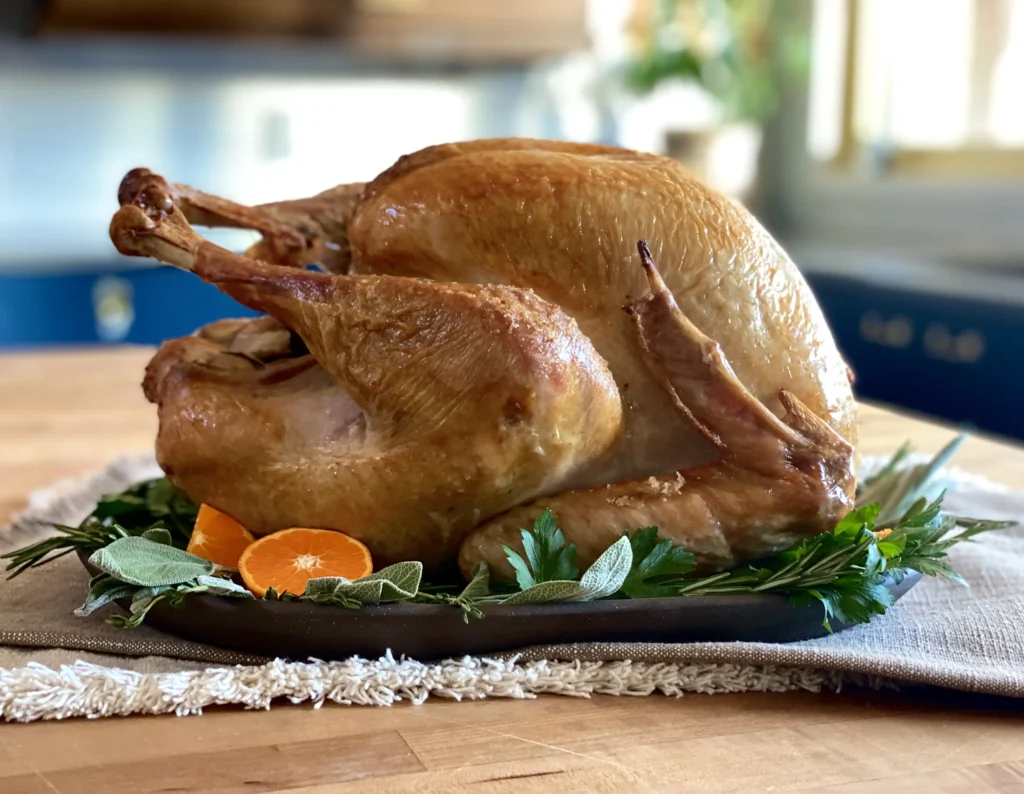
ACTIVE TIME: 30 minutes
TOTAL TIME: 2 days 15 hours
Yield: 10 12 servings
Software
- 1 14-16 pound Frozen turkey
- 6 quarts hot water
- 285 grams
kosher salt (2 cups) plus more for gravy - 220 grams dark brown or turbinado sugar (1 1/4 cups)
- 2,268 grams ice (5 pounds)
- 400 grams carrots (about 4 medium), cut into 1/4-1/2 inch thick half-moons
- 225 grams leeks (1 medium), cleaned and cut into 1/4-1/2 inch thick half-moons
- 113 grams cremini mushrooms (4 ounces), halved
- 14 grams fresh rosemary (about 6 sprigs)
- neutral oil (safflower, sunflower, peanut) for the turkey
- 1 cup white wine (or you can substitute with chicken or turkey stock)
- 1 quart unsalted chicken or turkey stock
- 56 grams unsalted butter (4 tablespoons)
- 45 grams
all-purpose flour (5 tablespoons) - 1 tablespoon chopped fresh thyme
- 1 1/2 teaspoons apple cider vinegar
- 1-2 drops soy sauce
- 1/4 teaspoon
freshly ground black pepper , plus more to taste
Specialized Hardware
- Sport sideline style beverage cooler (5 gallon range)
- a large wad of bubble wrap
- 2 rimmed half sheet pans with wire racks
- butcher's twine
- Probe style digital thermometer with alarm
Procedure
- Brining the frozen bird: Dissolve the brown sugar or turbinado sugar and the salt in 6 quarts of hot water, as in just hot from the tap. When the solids are dissolved follow with 5 pounds of ice and stir until it's almost melted, then gently lower the turkey into the cooler, breast-end down. Take a wad of bubble wrap and stuff it down on top of the bird, then close the lid of the cooler. The bubble wrap will help keep the bird fully submerged. Set the cooler in a cool place for 48 to 60 hours (2.5 days).
- When you're ready to roast, heat the oven to 500 F and adjust the oven racks so that the turkey will fit on the rack on the second lowest level in the oven. Spread the carrots, leek, mushrooms, and rosemary in a single layer on a half sheet pan and top with an oven-safe wire cooling rack.
- Take the turkey out of the brine and remove the neck and bag of guts. Rinse the turkey inside and out with cold water. Discard the brine and pat the bird as dry as you can with paper towels. Place the bird on the wire rack above the veg-rosemary mixture. Cut a piece of butcher's twine, about 5 feet long and truss the turkey. (See note)
- Pre-form an aluminum shield (aka a turkey triangle) by folding a large sheet of heavy duty aluminum foil to form a triangle. Place over the turkey breast so that the point is toward the legs. Press on the sides of the foil to form it to the breast and hold its shape. Remove and set aside next to the oven for now. Brush the turkey lightly with oil. Slide the oven rack out, place the turkey on it, then pour 1 cup of wine or stock into the pan of vegetables. Carefully slide the rack in and close the door.
- Roast in the oven for 30 minutes. (If you have an exhaust fan, turn it on. If you don't, open a window; there will be some smoke.) Carefully remove the turkey from the oven and, working quickly, insert a probe thermometer into the thickest part of the breast, avoiding any bones. If the breast skin is already very dark, top with the turkey triangle, If it is golden brown, don't add the turkey triangle, but keep an eye on the skin and add it if it is getting too dark.
- Return the turkey to the oven and reduce the oven temperature to 350 F. Set an alarm on the probe to go off at 155 F. A 14-pound turkey should take an additional 1 1/2 to 2 hours, but the temperature of the meat is more important than the time it takes to get there, so keep an eye on the thermometer.
- When the alarm goes off, transfer the turkey to a second cooling rack on a second half sheet pan and leave the bird to rest for 45 minutes before transferring to a cutting board for carving.
- Meanwhile make the gravy: Remove the wire rack from the roasting pan and put the rack in the sink. Transfer the vegetables and any juices to a 4-quart saucepan. Add the quart of stock to the saucepan, place over medium-high heat, and bring to a simmer. Reduce the heat to medium-low and hold the simmer until the broth is flavorful, about 10 minutes.
- Strain the broth through a fine-mesh sieve set over a large heatproof measuring cup or bowl, pressing on the solids to extract as much liquid as possible. Discard the solids. Remove most of the fat using a ladle or fat separator. Measure out 4 cups of the fortified broth, saving any remainder for another use. Wipe out the saucepan.
- Add the butter to the now empty saucepan and return to medium heat to melt. Once the butter has melted, briskly whisk in the flour, followed by the thyme. Continue whisking until the flour and fat (the "roux") lighten in color and foam, about 1 minute. Then, still whisking, slowly pour in the 4 cups fortified broth. Bring to a simmer, then reduce the heat to medium-low and continue to cook, whisking frequently, until thickened, about 7 minutes. Remove from the heat and stir in the vinegar, soy sauce, and pepper. Taste and season with additional pepper and/or salt. Serve with the turkey.
Note:
I have gone over to trussing because I've found that a uniform poultry package (so to speak) cooks more evenly than one that's all kind of spread out with wings and legs akimbo. You may truss however you like of course but we've snuck a little video in here to demonstrate how we do it.